Software Engineering Fundamentals
How contracts, boundaries, state protection, testing, debugging, and controlled releases make applications dependable even when model behavior is uncertain.
42 talks · 50 speakers


The AI Engineer knowledge library
Connected chapters on AI systems, applications, and organizations, with the conference talks behind them.
60 chapters · 2281 talk selections
Browse by subject
How contracts, boundaries, state protection, testing, debugging, and controlled releases make applications dependable even when model behavior is uncertain.
42 talks · 50 speakers
How examples, objectives, fitted parameters, and independent evidence turn data into useful predictions—and why prediction alone does not tell you what action will work.
46 talks · 55 speakers

How text, message structure, and special markers become model-specific vocabulary IDs—and how that representation governs boundaries, reconstruction, request limits, and charges.
9 talks · 7 speakers
How learned vectors preserve task-specific distinctions, acquire geometry, support larger systems, and fail when similarity is mistaken for truth.
28 talks · 32 speakers

How sequences become contextual states, how those states produce predictions, and what information access can—and cannot—guarantee.
18 talks · 18 speakers
How instructions and demonstrations guide a fixed model—and how to test whether the resulting behavior transfers beyond the prompt-development cases.
32 talks · 39 speakers
How objectives, data exposure, schedules, compute, and checkpoint lineage establish and extend a model’s capabilities.
31 talks · 35 speakers

How demonstrations, preferences, and rewards change a pretrained model—and how to determine what the changed checkpoint actually does.
54 talks · 56 speakers

How intermediate work, alternative solutions, and checking improve answers—and how to decide when that work is worth doing.
23 talks · 24 speakers

Generated examples help only when they add verified coverage of a defined capability gap and improve performance on evidence kept independent from their creation.
40 talks · 45 speakers

Build executable tasks whose observations, actions, rewards, resets, and recorded outcomes mean what you intend.
33 talks · 37 speakers

Acquire new capabilities through successive updates while preserving useful behavior—and the ability to keep learning.
11 talks · 11 speakers

Train a model from another model’s behavior—and determine what actually transferred.
22 talks · 25 speakers

How to choose, transform, label, release, and maintain data whose meaning remains fit for an AI system’s intended use.
26 talks · 30 speakers

Recover text, structure and useful records while preserving what they mean and where they came from.
13 talks · 15 speakers

Turn external information into useful answers without losing the conditions, sources, and limits that make those answers defensible.
51 talks · 61 speakers

How search systems acquire an eligible collection, turn it into candidates, rank useful results, and serve them under permission, freshness, coverage, and latency constraints.
41 talks · 48 speakers

When explicit identities, typed relationships, and connected evidence justify their construction—and how to keep every graph assertion sourced, revisable, and useful.
26 talks · 26 speakers

How to construct the smallest sufficient, current, permitted, and recoverable input for each model call.
82 talks · 97 speakers

Retain useful experience across interactions without turning old, mistaken, or unauthorized information into a lasting premise.
51 talks · 55 speakers

Reusable capability exchange, from discovery and authorization to execution and uncertain outcomes.
50 talks · 54 speakers

How to turn uncertain model generations into validated records, controlled action requests, and observed software effects.
46 talks · 46 speakers

Choose useful actions from changing observations, keep them within delegated limits, and establish what the resulting work accomplished.
93 talks · 99 speakers

Preserve work, control execution, recover uncertain effects, and establish completion across interrupted agent tasks.
63 talks · 71 speakers

Coordinate automated software production without losing control of requirements, acceptance, release, or unfinished work.
44 talks · 50 speakers
Turn software requests into inspected, tested, and integrated changes—not just plausible code.
77 talks · 85 speakers

Observe graphical state, identify the intended control, deliver the right input, and verify the authorized outcome.
45 talks · 52 speakers

Continuing assistance that remembers what matters, carries work forward, and stays within the person's control.
30 talks · 32 speakers

Divide work and discretion without losing task meaning, responsibility, or control of the complete outcome.
33 talks · 43 speakers

How a serialized model request becomes a streamed completion—and how state, scheduling, memory, and workload shape determine latency, throughput, and sustainable capacity.
46 talks · 57 speakers

Map numerical work onto parallel hardware, control data movement, and measure which changes improve the complete workload.
13 talks · 13 speakers

Divide model work and numerical state across devices without losing control of communication, update semantics, or recovery.
16 talks · 27 speakers

How numerical mappings, calibration and execution support turn fewer bits into useful savings—and where those savings can fail.
18 talks · 24 speakers

Choose where inference belongs, fit the complete workload to the device, and preserve clear promises about readiness, connectivity, and data.
67 talks · 84 speakers

How to run generated or otherwise untrusted code with bounded files, networks, authority, resources, lifetime, and tenant exposure—without pretending teardown reverses effects outside the boundary.
35 talks · 36 speakers

Choose suitable models and serving paths while preserving permissions, request meaning, resource limits, and honest failure behavior.
26 talks · 33 speakers

Build shared capabilities that make AI systems easier to deliver and operate while keeping authority, running versions, capacity, and responsibility visible.
31 talks · 39 speakers

Reduce the resources needed for useful work without losing the quality, responsiveness, or operating limits that make the system worth using.
35 talks · 43 speakers

How to turn intended work into bounded, reproducible evidence—and know exactly where that evidence stops.
78 talks · 89 speakers

Design operational evidence that can reconstruct an AI execution, locate consequential failures, attribute time and cost, and state honestly what remains unknown.
67 talks · 81 speakers

Trace attacker influence through data, models, tools, execution, and external effects—and place enforceable controls where that influence would otherwise gain authority.
60 talks · 70 speakers

Turn decisions about appropriate information use into enforceable limits on collection, access, disclosure, modification, retention, and deletion.
28 talks · 37 speakers

How to combine text, images, audio, video, and other signals without losing the relationships that make their conclusions meaningful.
32 talks · 42 speakers

How images and video become predictions about objects, regions, space and events—and how to choose representations that preserve the information a task needs.
23 talks · 28 speakers

How speech models, audio transport, and conversational policies cooperate to listen, respond, stop, and recover.
32 talks · 42 speakers

How images, sound and video are synthesized, directed, revised and assessed.
38 talks · 42 speakers

Learning how environments change—and establishing when predicted futures are useful for planning, training, and simulation.
14 talks · 16 speakers

Connecting goals, measurements, motion, and learning in a physical system that must keep responding while the world changes.
13 talks · 15 speakers

How to help people understand, direct, review, interrupt, and recover from AI behavior that may be uncertain, delayed, or partly wrong.
54 talks · 63 speakers

Redesign complete processes, allocate decisions deliberately, and keep people, records and external effects under clear control.
50 talks · 52 speakers

Turn customer work into a useful, maintainable system—and turn deployment findings into better product decisions.
51 talks · 58 speakers

Find work worth improving, make a bounded promise, and build a business that can keep it.
28 talks · 31 speakers

Adopt AI by changing how work is delivered, who can decide, and how useful outcomes are sustained.
72 talks · 81 speakers

Delegate commercial choices while preserving valid terms, purchasing authority, and responsibility for what remains owed.
26 talks · 28 speakers

Improve customer understanding, communication, and follow-through—and distinguish useful commercial work from increased activity.
26 talks · 30 speakers

Choose worthwhile investments, fund the capabilities they require, and keep authority aligned with consequences.
24 talks · 30 speakers

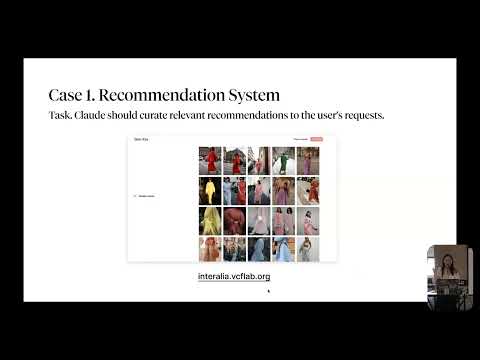
Select useful items, learn from incomplete feedback, and measure whether the resulting policy improves the product.
17 talks · 23 speakers

Build useful financial assistance by preserving meaning, separating analysis from authority, and checking the complete workflow.
44 talks · 51 speakers

Build useful assistance around clinical work, meaningful records, accountable people, and evidence of completed care.
34 talks · 39 speakers

How to turn automated trials into informative comparisons, reproducible findings, and defensible research decisions.
23 talks · 27 speakers

Explore additional talk collections. These archive topics are separate from the chapters above.