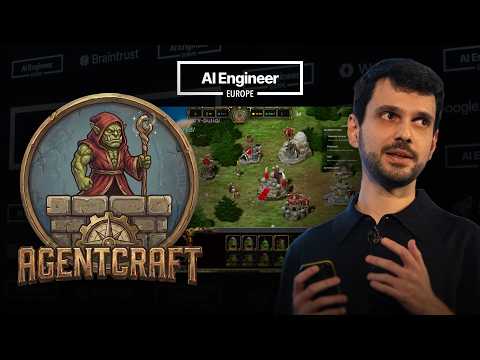
 ▶ Watch ↗
AI Engineer Europe 202611:18

Bio, Work & Ideas
Conference affiliation: Co-Creator · MCP Apps · 2026
Ido Salomon created MCP-UI and AgentCraft and co-created MCP Apps, an open standard for embedding interactive applications inside AI assistants. His projects confront complementary problems: assistants reduce sophisticated applications to walls of text, while coordinating multiple coding agents can demand more attention than developers have available.
Previously chief architect at Talon Cyber Security, Salomon helped develop its enterprise browser before leading end-user AI as an architect at Palo Alto Networks. He subsequently joined monday.com, describing his work there as an AI lead in the chief executive’s office.
In 2023, he introduced AgentLLM, an experiment in browser-native autonomous agents designed around privacy and security. WebextLLM explored incorporating language models into browser extensions; GitMCP, which he co-created, connects coding assistants to GitHub repositories and documentation to reduce fabricated APIs and other coding hallucinations.
Salomon introduced MCP-UI in May 2025, enabling services to deliver their own interactive interfaces through the Model Context Protocol. Working with Liad Yosef and the wider MCP community, he helped develop that approach into MCP Apps, introduced as an official protocol extension in January 2026.
▶ Watch ↗AI Engineer Europe 202611:18
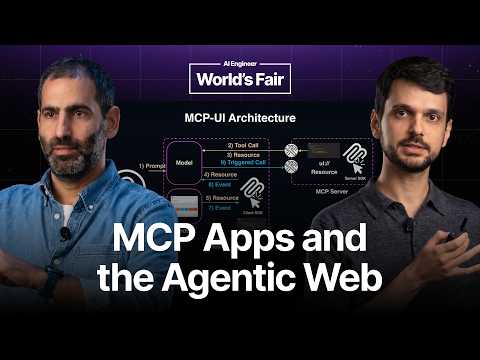 ▶ Watch ↗
AI Engineer World's Fair 202618:38
 ▶ Watch ↗
AI Engineer Europe 202622:21
 ▶ Watch ↗
AI Engineer World's Fair 202614:50