Conference affiliation: Co-Founder & CTO · The Browser Company · 2026
Hursh Agrawal is co-founder and chief technology officer of The Browser Company, creator of the Arc and Dia browsers. His work spans browser infrastructure, cross-platform development, AI-assisted knowledge work, and engineering leadership shaped by firsthand experimentation with increasingly autonomous coding agents.
Agrawal previously co-founded Branch, an online conversation platform acquired by Facebook in 2014. At Facebook, he worked on Creative Labs products and became a technical lead; he later served as interim chief technology officer at Thirty Madison. In 2019, he reunited with Branch co-founder Josh Miller to establish The Browser Company.
Arc rethought the browser as a workspace for organizing online activity. Supporting that experience across operating systems required extensive Chromium infrastructure and Swift on Windows, an engineering direction advanced with Swift core-team member Saleem Abdulrasool. Agrawal subsequently helped steer the company toward Dia, an AI-native browser designed to understand users’ working context and assist across their tasks. He introduced Dia in June 2025 and announced its general availability for Mac that October.
After Agrawal announced that The Browser Company would join Atlassian, Atlassian completed its acquisition on October 20, 2025. The deal placed Arc and Dia within a larger enterprise-software business focused on how AI can reshape knowledge work.
How Agrawal approaches AI engineering
Hands-on prototyping as leadership. Engineering leaders need direct experience with new models to judge their real capabilities, anticipate product implications, and demonstrate opportunities through working software. Agrawal favors internal tools and exploratory prototypes over critical-path projects that depend on an executive’s uninterrupted availability.
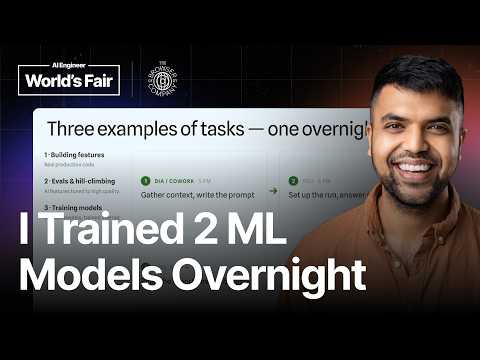
Context-rich overnight coding agents. He equips agents with repository details, business goals, previous decisions, and information from Slack, Jira, Confluence, and Notion. Overnight, they implement features, write tests, prepare manageable pull requests, monitor continuous integration, and address automated review; he inspects and tests the results himself.
Evaluation-driven AI improvement. Feedback from prototype runs becomes evaluation datasets and scoring rubrics that agents use to refine AI features against quality, latency, cost, and overfitting constraints. He has also used synthetic data, frontier-model ensembles, and isolated infrastructure to develop specialized classifiers for personally identifiable information.
Agrawal’s approach to AI-assisted technical leadership makes human accountability inseparable from autonomy: readable pull requests, trustworthy tests, feature flags, prototype environments, and careful personal review protect both production systems and engineering standards.
A crowded management calendar can still accommodate building when agents work between check-ins—but useful autonomy depends on context, verification and personal review.

 ▶ Watch ↗