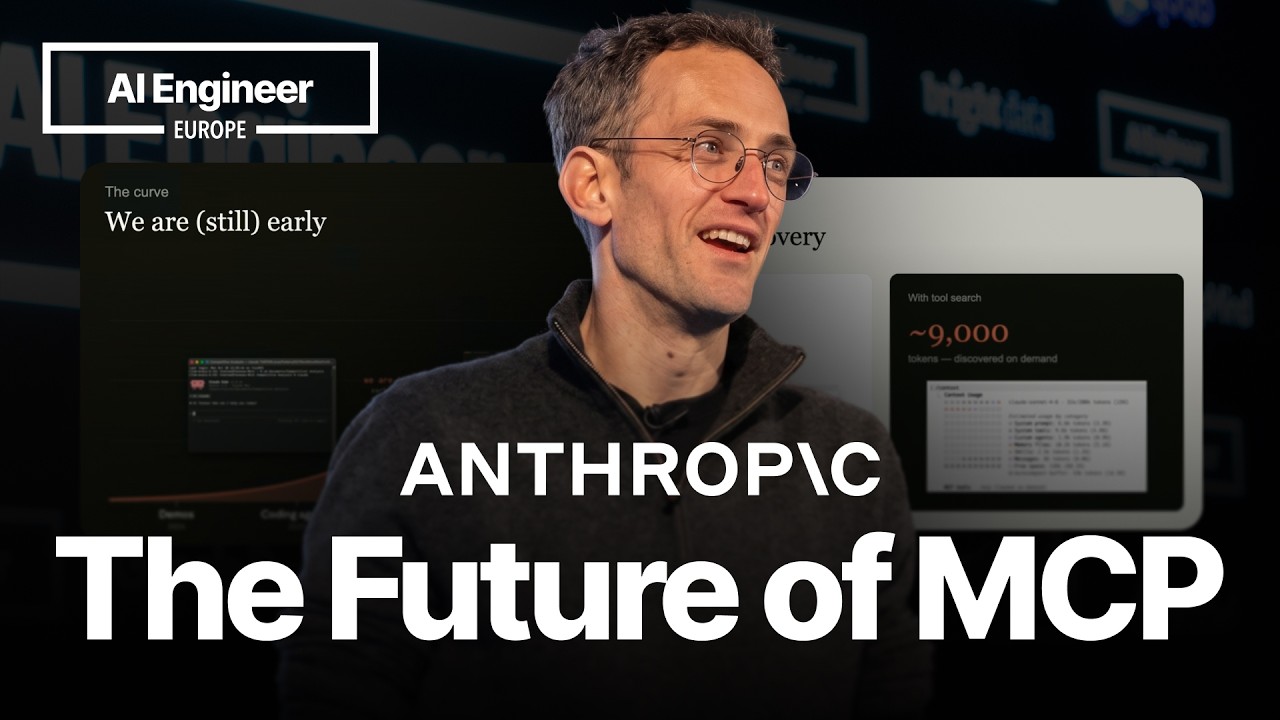
David Soria Parra is a member of technical staff at Anthropic, co-creator and lead maintainer of the Model Context Protocol, and chair of the Agentic AI Foundation’s technical committee. MCP gives AI applications a shared, vendor-independent way to connect with external tools, information, and services—making those integrations portable across assistants, editors, and enterprise systems.
From PHP to agent infrastructure
Soria Parra began contributing to PHP while working part-time at Mayflower GmbH in Munich. At Sun Microsystems, he optimized PHP for SPARC processors while attending university, and later served as a release manager for PHP 5.4 and PHP 5.5.
In 2011, he authored PHP’s accepted proposal to adopt distributed version control. After the project moved to GitHub, he helped establish a workflow enabling core contributors to merge external pull requests. His involvement with Mercurial subsequently led to Facebook’s source-control team and approximately a decade at Facebook and Meta working on developer tooling, source control, and static analysis. He also spent time as an entrepreneur in residence at Sutter Hill Ventures before joining Anthropic.
At Anthropic, Soria Parra co-created MCP with Justin Spahr-Summers to eliminate the proliferation of bespoke connections between AI clients and external systems. The open protocol lets developers expose capabilities once for use across compatible applications. Its movement into the Linux Foundation’s Agentic AI Foundation extends that vendor-neutral approach to technical governance.
His priorities for production-grade agents include:
Progressive discovery: Agents should locate and load relevant tools when needed instead of filling their context windows with every available tool definition. This makes large catalogs usable without treating context overload as an inherent limitation of MCP.
Programmatic tool calling: Models can compose tools inside an execution environment, using structured outputs to connect operations and filter results. Moving orchestration into code reduces repeated inference and makes multistep workflows more flexible.
MCP Apps: Servers can deliver portable interactive interfaces alongside model-accessible tools, allowing people and agents to operate the same application across compatible clients.
Enterprise identity and agent-native design: Useful integrations need centralized authorization, organizational identity, asynchronous tasks, and capabilities designed around real workflows—not mechanical translations of REST endpoints.
Soria Parra treats MCP as one element of a broader agent-connectivity stack: skills provide domain knowledge; command-line tools excel when an execution environment is available; and MCP supplies portable interfaces, richer semantics, authorization, and governance. He wrote the original Python SDK and has acknowledged the need to improve its design.
His public roadmap priorities include agent-to-agent communication, triggers and events, progressive discovery, and stronger authorization mechanisms. The aim is shared infrastructure that lets increasingly capable agents work across real organizational systems without locking developers into a single vendor.