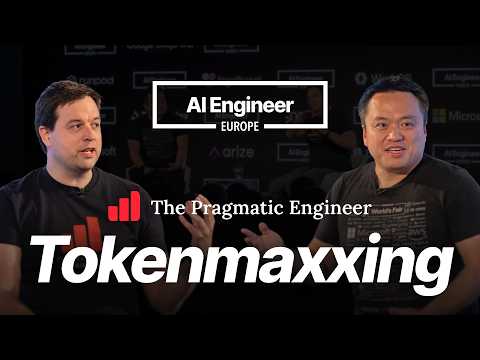
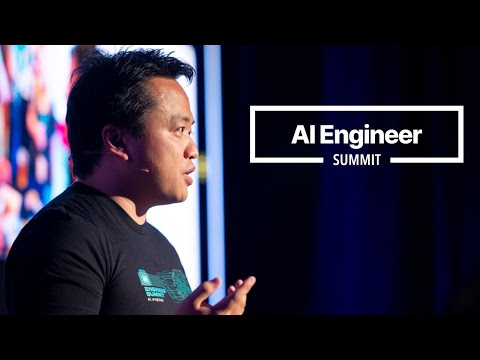
Shawn “swyx” Wang is the co-founder and chief executive of AI Engineer, co-founder and editor of Latent Space, and founder of Smol AI. His 2023 essay The Rise of the AI Engineer articulated an emerging profession devoted to turning foundation models into useful products; his conferences, podcast, newsletter, and software experiments subsequently gave that profession a community and a practical vocabulary.
Wang grew up in Singapore and worked in currency-options trading and hedge-fund analysis before joining financial-technology company Sentieo in 2016. He began studying programming in 2017, attended Fullstack Academy, and became a frontend engineer at Two Sigma. Roles at Netlify, Amazon Web Services, Temporal, and Airbyte followed, moving him from software development into developer experience and advocacy. His account of a decade of career changes traces the progression from finance to developer tools, independent publishing, and AI.
His 2018 essay Learn In Public urged developers to publish their notes, teach what they discover, and invite correction as they learn. He applied those principles to writing about React, JavaScript, TypeScript, and serverless computing; helped start Svelte Society; and wrote The Coding Career Handbook, now free and open source.
Wang started Latent Space in 2022 and launched its podcast with Alessio Fanelli the following year. His June 2023 AI-engineering essay announced the first AI Engineer Summit, organized with co-founder Benjamin Dunphy. At that gathering, he distinguished three emerging roles: engineers using AI, engineers building AI products, and AI systems performing engineering work. By 2024, his conception of the field encompassed retrieval, code generation, agents, multimodality, open models, evaluation, and the organizational challenges of deploying them together.
He also advises Cognition and has worked on coding-agent evaluation and codebase understanding. In 2026, he helped expand Latent Space into AI for science, extending its coverage beyond software into scientific research.
- AI engineering is a distinct professional craft. Wang argues that useful AI products demand capabilities beyond prompting or model training: evaluation, retrieval, orchestration, context management, system design, and attention to actual user needs. His 2023 summit keynote positioned the profession between conventional software engineering and machine-learning research without treating either boundary as fixed.
- Judge agents by useful output, not labels. In his framework for AI-intensive applications, Wang measures systems by valuable machine output relative to human effort. His SPADE framework groups recurring work into synchronization, planning, analysis, delivery, and evaluation, shifting attention from arguments about whether a workflow qualifies as an agent to whether it produces results.
- AI News treats curation as an engineering problem. Through Smol AI and AI News, Wang combines automated collection and summarization with editorial filtering to help practitioners follow technical developments. The goal is selective, useful information, including the willingness to say when little deserves attention.
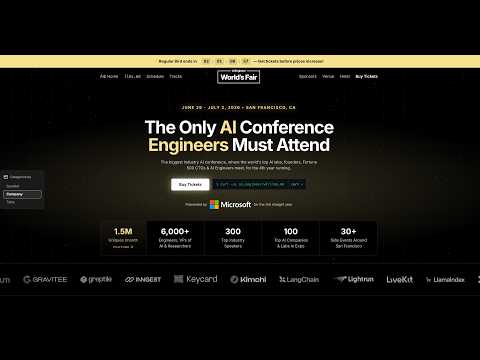
- Agents for everything else can amplify an entire team. Wang uses AI Engineer as a laboratory for agents that translate Figma designs into websites, maintain conference schedules as code, synchronize speaker data, and research purchases. His account of agent-assisted conference operations identifies the organizational payoff: designers and other non-engineers can act without waiting for a developer. That experience also underpins his emphasis on agent-oriented interfaces: APIs, command-line tools, and Model Context Protocol integrations that make software accessible to automated systems.
- No more slop means accountability for outcomes. Wang defines slop by low quality, inaccuracy, and inauthenticity, whether generated by people or machines. His case for higher standards in AI-assisted work emphasizes modular software, codebase understanding, careful curation, and clear human oversight; token consumption, lines of code, and uninterrupted agent runtime are inadequate substitutes for worthwhile results.
More recently, Wang has explored simulation and synthetic human feedback as potential ingredients in automated research and AI development.