Conference affiliation: Senior Engineering Manager - AI Platform · Snorkel AI · 2026
On this page
Rustem Feyzkhanov is an AI platform engineering manager at Snorkel AI and an AWS Machine Learning Hero specializing in the infrastructure that makes machine-learning systems and autonomous agents reliable in production. His work spans industrial computer vision, serverless model deployment, isolated execution environments, and company-specific agent evaluation.
From manufacturing to agent infrastructure
Feyzkhanov joined manufacturing-technology company Instrumental as its second machine-learning engineer and spent six years developing systems that identified production-line defects. He progressed from hands-on research, product development, and customer collaboration to staff machine-learning engineer and ultimately managed the machine-learning team, a trajectory he described when announcing his departure from Instrumental.
He also became a prominent practitioner of serverless deep learning. His 2019 guide to TensorFlow inference on Google Cloud Functions examined how serverless infrastructure can scale with demand while avoiding idle capacity. Amazon Web Services named him a Machine Learning Hero in 2020. His open-source projects include lambda-packs, which packages dependencies for AWS Lambda; gcf-packs, its Google Cloud Functions counterpart; and stepfunctions2processing, which supports AWS Step Functions processing workflows.
Feyzkhanov later tested Mistral 7B on AWS Lambda, evaluating cold starts, throughput, and cost. He concluded that the configuration suited some asynchronous or specialized workloads but was not ready for responsive, real-time production. At Snorkel AI, his team uses isolated agent sandboxes to reproduce execution environments and prevent workloads from interfering with one another.
How he approaches dependable agents
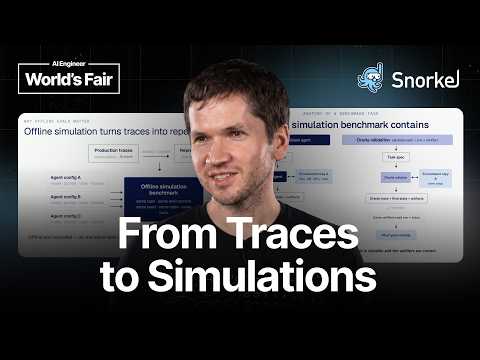
Production-faithful agent simulations: Feyzkhanov turns production traces into repeatable experiments reflecting a company’s actual APIs, database state, policies, tools, and user interactions. Public benchmarks establish useful reference points; private simulations determine whether an agent works under real operating conditions.
Benchmarks as engineered environments: Each evaluation combines instructions, reproducible containers, hidden oracle solutions, verification logic, and metadata. Database snapshots, mocked services, simulated users, and intermediate checkpoints make complex workflows testable without recreating production wholesale.
Verification beyond the final answer: Effective checks inspect changed database records, generated files, tool calls, execution traces, and final system state. Deterministic rules handle clear outcomes; model-based judges and targeted expert review address ambiguity.
Agent evaluation as release infrastructure: Benchmarks need dependency controls, continuous integration, defenses against reward hacking, representative failure cases, and held-out validation. Repeated simulations measure accuracy alongside cost, latency, and retries, while locating fixes in the appropriate layer: prompts, tools, execution harnesses, reusable skills, or structured outputs.