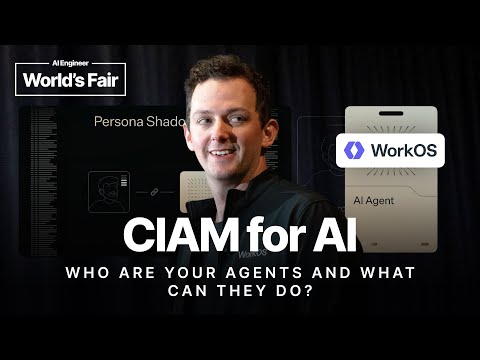
Michael Grinich is the founder and chief executive of WorkOS, which supplies the identity, authentication, permissions, and audit infrastructure that software companies need to sell to enterprises. A former Dropbox engineer and Nylas co-founder, he is now tackling a related challenge: allowing autonomous AI agents to operate across business systems while keeping their actions authorized, auditable, and accountable to people.
Grinich studied computer science at MIT before working at Dropbox and co-founding Nylas. Its cross-platform email client, Nylas Mail, attracted enthusiastic users but encountered a familiar obstacle: enterprise adoption demanded single sign-on, security controls, and compliance features that a polished product alone could not provide. Nylas discontinued the client and shifted toward infrastructure for other software companies.
Grinich described the distance between individual enthusiasm and organizational approval as the enterprise chasm. He founded WorkOS to close that gap, providing APIs for single sign-on, directory synchronization, audit logging, and other enterprise requirements. The company began building its technology in 2019 and expanded into granular authorization, integrations, encryption, and abuse detection.
In March 2026, Grinich announced a $100 million Series C at a $2 billion valuation, naming OpenAI, Anthropic, Cursor, Perplexity, and Vercel among WorkOS customers. His priorities increasingly extend beyond authenticating human users to controlling software that takes action independently.
The technical ideas defining his work
- Agent identity requires accountable delegation. Agents need identities connected to human authority without inheriting unrestricted human privileges. Grinich advocates shadow identities, signed delegation chains, short-lived capability tokens, and selective human approval. His framework for agent authentication and authorization treats credential security, attributable actions, and auditable activity as prerequisites for enterprise adoption.
- Permissions must adapt to agent intent. Conventional OAuth scopes and role-based permissions assume useful actions can be specified beforehand. Agents pursue open-ended goals across email, customer records, documents, and other systems, making both blanket access and constant approval requests impractical. Grinich favors a middleware trust boundary that evaluates requests dynamically and escalates consequential decisions to people.
- WorkOS Airlock applies intent-based access control. In August 2026, Grinich introduced Airlock as a permissions and control layer for agents. Its runtime authorization model evaluates proposed actions against policy, brokers credentials, maintains audit logs, and can approve, deny, request context, or require human authorization.
- Auth.md gives agents their own onboarding path. WorkOS developed Auth.md to help agents discover services, register with verifiable identities, obtain scoped credentials, and connect their accounts to a person or organization.
Grinich also champions a minimum awesome product: customers may offer unfamiliar software only one serious opportunity to demonstrate its value. His management approach emphasizes experienced individual contributors, rapid communication, and weekly operating rhythms.