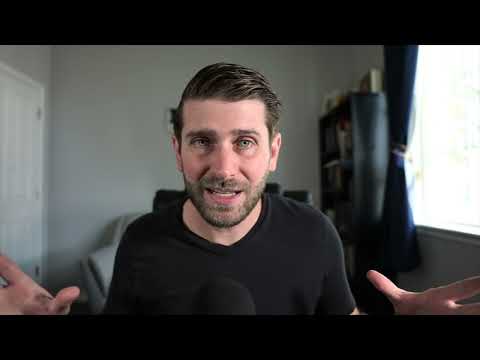
Mark Hennings is the co-founder and chief executive of Simple Booth and a founder of Entry Point AI. He builds software that makes sophisticated technology practical for nontechnical users, from professional photo booths to specialized language models.
From event photography to AI products
Hennings began in the events industry as a wedding videographer. In 2012, he taught himself app development after struggling to find software that made iPad-based event photography and instant sharing straightforward. He subsequently worked with designer Alex Kirts and joined forces with photo-booth operator Jeremy Cox to build Simple Booth, combining photography software, dedicated hardware and online galleries. Its HALO system turned an iPad into a self-contained event-photo experience, and the company reached No. 414 on the 2018 Inc. 500.
By 2023, Hennings and Miha Cacic had founded Entry Point AI, a platform for no-code fine-tuning that helps teams organize training examples, generate synthetic data, estimate costs, adapt language models and compare results. Its premise is that marketers, consultants and other domain specialists should be able to shape AI behavior without managing servers or writing data-preparation scripts.
At the 2023 AI Engineer Summit, Hennings demonstrated a press-release generator trained on published examples. He used GPT-4 to reconstruct the factual inputs behind existing releases, organized those facts in structured CSV fields, and fine-tuned GPT-3.5 Turbo to produce polished drafts. The workflow keeps factual inputs explicit while teaching the model style, structure and task-specific judgment.
- Training data as a collaborative asset. Hennings treats examples as editable product infrastructure: teams can inspect edge cases, refine expected outputs and improve models with production feedback. His fine-tuning workflow connects dataset preparation, cost estimation, evaluation and deployment.
- Different techniques solve different problems. He distinguishes rapid prompt-based experimentation, retrieval-augmented generation for current external information, and fine-tuning for repeatable behavior, formatting and tone. His comparison of these approaches treats them as complementary tools.
- Smaller models can improve production economics. Task-specific adaptation can reduce prompt length, inference latency and operating costs. Hennings also translates LoRA and QLoRA into practical decisions about adapter configuration and memory requirements.
- Prompt injection demands layered defenses. His security guidance combines trusted-input separation, adversarial testing and potentially fine-tuning; adaptation is one defensive layer, not a guarantee.
More recently, Hennings has integrated generative AI photo experiences into Simple Booth, including likeness-preserving transformations, personalization based on guest responses, and support for in-person and virtual events. His account of the product launch brings his two entrepreneurial tracks together: accessible event photography and deployable generative AI.