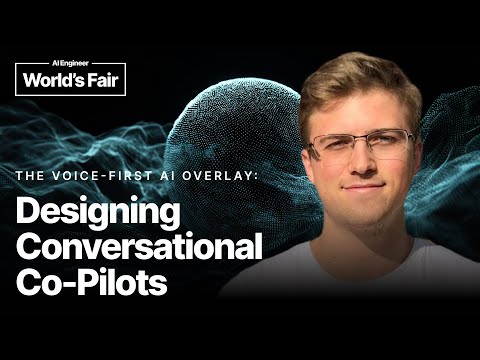
Gregory Bruss is an Amsterdam-based software engineer developing voice-first AI overlays that help people during live conversations without becoming another participant. His work addresses a central challenge for conversational AI: delivering useful assistance while protecting the attention, autonomy, and rhythm of human interaction.
Raised in Johannesburg, Bruss studied artificial intelligence at Maastricht University and data engineering and analytics at the Technical University of Munich. He founded and led the Maastricht Machine Learning Group, taught English in China, and subsequently established Standard Bank Group’s Data Intelligence Center of Excellence, supporting fintech startups across the bank’s African investment portfolio. His professional background combines machine learning, data infrastructure, and firsthand experience navigating different languages.
His conversational co-pilot prototype assists foreign-language calls through real-time caption processing, smart debouncing, contextual language-model suggestions, and translation endpoints. The interface determines when help should appear while leaving the conversation itself to its human participants.
- Conversational timing: Assistance must arrive when relevant; premature suggestions interrupt, late suggestions miss their opportunity, and incorrect context creates distraction.
- Progressive autonomy: Support should adapt as users become more capable, helping language learners without replacing their developing judgment.
- Cognitive load as an engineering constraint: Fragmented speech recognition, cascading transcription errors, unstable captions, and intrusive interface placement can overwhelm users even when the underlying model performs well.
- Privacy-preserving conversational interfaces: On-device inference, multimodal context, full-duplex speech models, and agent security could shape future systems that respect both conversational nuance and private information.