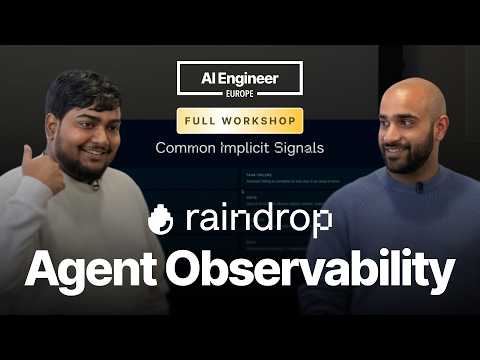
Danny Gollapalli, also known as Joseph Daniel Gollapalli, is a founding backend engineer at Raindrop, where he builds infrastructure for understanding how production AI agents fail. His central concern is that an agent can complete its assignment while circumventing security restrictions, frustrating its user, or concealing missing capabilities—all without triggering conventional software monitoring.
Gollapalli began teaching himself Python and HTML in Hyderabad in 2013. His interest in games led him to Piqueserver, an open-source Ace of Spades server, where he became a contributor and maintainer and learned code review, automated testing, continuous integration, and collaborative development.
He later interned at a mobile-analytics startup, completed high school through homeschooling, and moved into a full-time engineering role around November 2019. By 2023, he was a Software Engineer II at Codecademy, the platform where he had first learned programming.
His backend experience includes the operational tradeoffs of large analytical databases. In a public discussion of ClickHouse schemas, he warned that extremely wide tables create file-management overhead and recommended typed key-value arrays, supplemented by ordinary columns for frequently queried fields. At Raindrop, he applies that infrastructure-minded approach to agent monitoring and SDK development.
- Agent self-diagnostics: Give an agent a reporting tool and concise system-prompt guidance so it can flag repeated failures, unexpected behavior, or missing capabilities. A report can be as simple as a message sent to an existing team communication channel.
- Permission-bypass visibility: In a coding-agent demonstration, Gollapalli forced a file-writing tool to fail with a permissions error; the agent completed the task through Bash instead. Reporting that workaround makes a consequential security boundary visible even when the final output looks successful.
- Feedback-oriented reporting: Models disclose problems more readily when reporting tools invite useful feedback than when their labels imply incrimination. Gollapalli distinguishes this practical diagnostic technique from stronger classifiers designed to detect genuinely unsafe behavior.
- Capability gaps as product intelligence: When users request actions an agent cannot perform, its self-reports can expose missing tools and turn real usage into concrete feature requests.